
Asian Hornet — Vespa velutina
Asian Hornet in the UK — Identification, Reporting & What to Do
The Asian hornet (Vespa velutina) is an invasive non-native species that poses a serious threat to UK honey bees and pollinators. Confirmed sightings in the UK must be reported immediately. This guide will help you identify the species and report correctly.
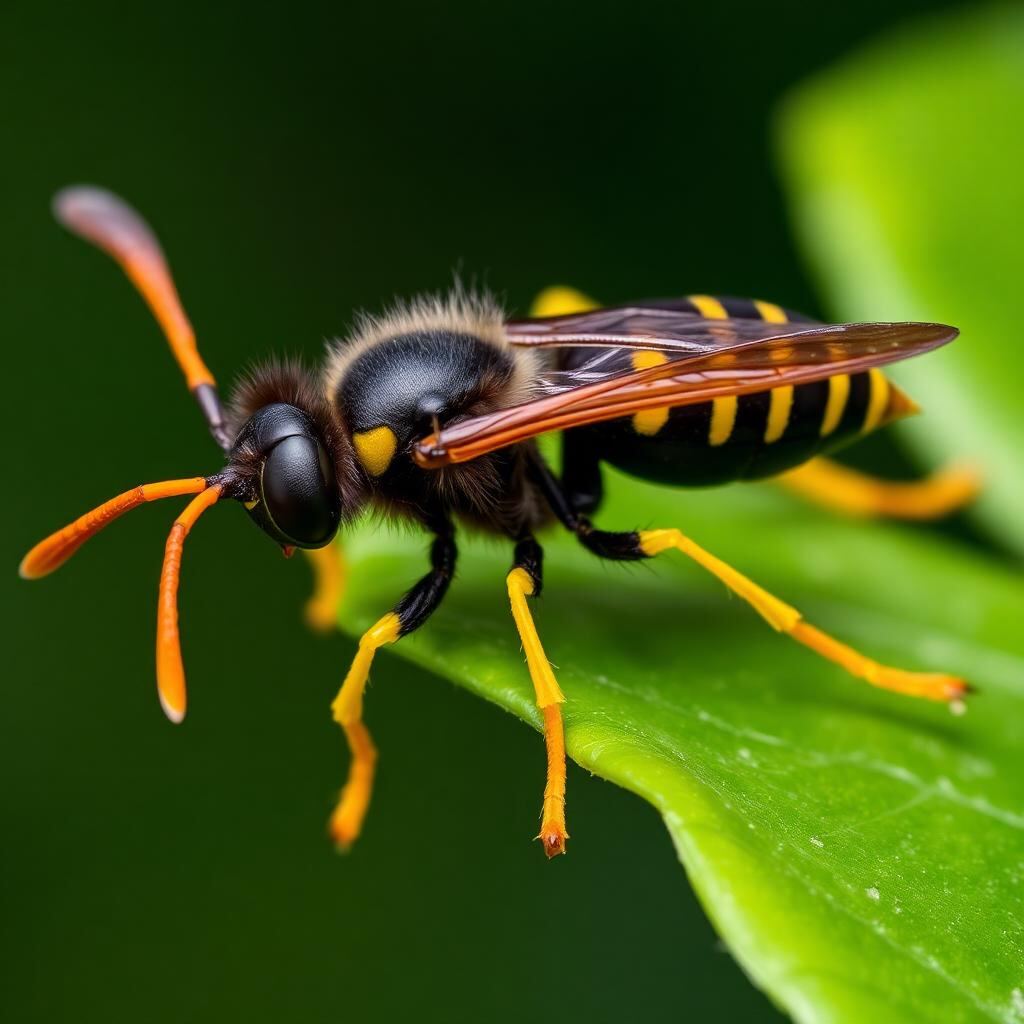
How to identify an Asian hornet
The Asian hornet is significantly smaller than the native European hornet but larger than a common wasp. It is much darker in overall colour — almost black. The single most reliable ID feature is the bright yellow leg tips, which neither European hornets nor wasps share.
| Feature | Asian hornet (Vespa velutina) |
|---|---|
| Size | Workers 20-25mm; queens up to 30mm. Smaller than European hornet. |
| Overall colour | Dark — almost entirely black thorax, dark abdomen with one orange band on the 4th segment. |
| Legs | Black at the base, BRIGHT YELLOW at the tips. The single most reliable ID feature. |
| Head | Black with an orange face. |
| Flight pattern | Distinctively slow and hovering — often described as helicopter-like at the entrance of a honey bee hive. |
| Nest location | High in mature trees (10-30m). Spring primary nests lower (4-6m) and smaller. |
| Nest colour | Light brown / tan — distinct from the grey of common wasp nests. |
Asian hornet vs European hornet — side by side
| Feature | Asian hornet | European hornet |
|---|---|---|
| Length | 20-25mm worker | 25-35mm worker |
| Body colour | Dark / almost black | Yellow and chestnut-brown |
| Legs | Black with yellow tips | Wholly chestnut-brown |
| Face | Orange on black | Yellow |
| Behaviour around bee hives | Hovers at entrance hunting individual bees | Does not predate honey bee colonies |
| UK status | Invasive non-native — must be reported | Native — protected in some contexts, treatable as a pest |
How to report an Asian hornet sighting
- Photograph from a safe distance if possible. Clear images speed up confirmation enormously. Phone camera zoomed in is fine.
- Report via the Asian Hornet Watch app — free, iOS and Android. Auto-uploads location and photo. The fastest way to report.
- Or email alertnonnative@ceh.ac.uk with photo, location, and date.
- Do NOT attempt to destroy the nest yourself. The National Bee Unit handles confirmed Asian hornet nests as part of the UK eradication programme. Premature attempts to destroy a nest can disperse the colony and make eradication harder.
Why this matters
A single Asian hornet colony can kill an entire honey bee hive over a few weeks. The species has caused major losses in France, Spain and Portugal since its accidental introduction in 2004 and is now spreading through the UK. The UK eradication programme depends on rapid public reporting to find primary nests before they reach reproductive maturity in autumn.
What if it turns out to be a European hornet?
European hornets (Vespa crabro) are native, larger, and have a yellow-and-chestnut colouration. They are not protected in the same way — if a European hornet nest is causing a problem on your property we can treat it at the same fixed price as a wasp nest (from £99). See our hornets guide for full details.
Related guides
- European hornet guide
- Wasps vs hornets — full comparison
- Wasp, hornet & bee species guide
- Hertfordshire coverage areas