
Hornets
Hornet Nest Removal Hertfordshire — European & Asian Hornet Guide
We treat European hornet nests across all of Hertfordshire with no hornet premium — prices start at £99 with a guaranteed price at the time of booking, the same as wasp nest removal. For Asian hornets, we help you identify and report correctly.
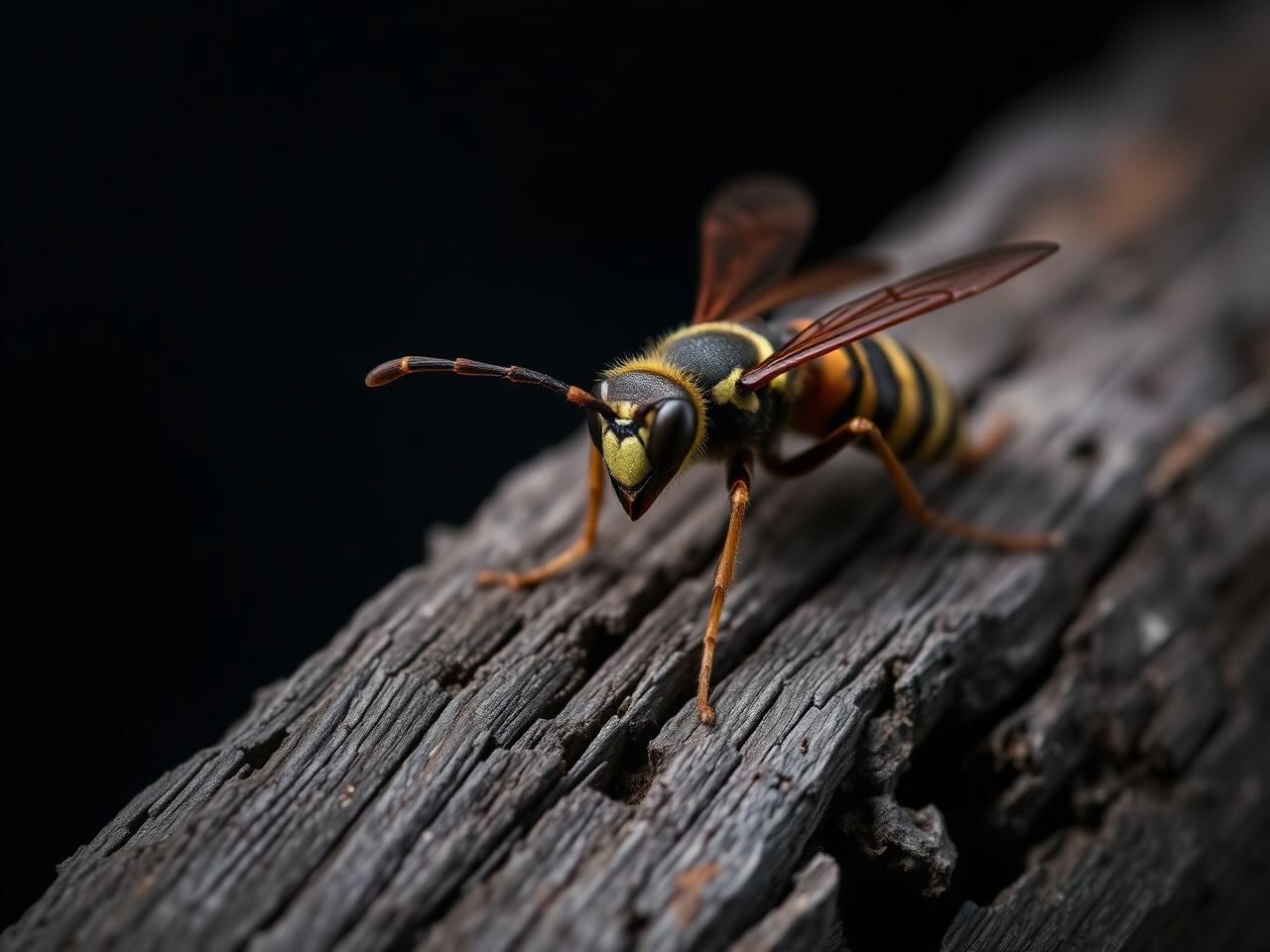
Hornets are Britain's largest social wasp. They are impressive, loud, and often frightening to encounter — but they are also frequently misidentified. This guide tells you everything you need to know about both hornets present in the UK, how to identify them, and what to do if you have a nest.
The two hornets you might encounter in Hertfordshire
There are currently two hornet species of significance in the UK: our native European hornet (Vespa crabro), which has been here for centuries, and the invasive Asian hornet (Vespa velutina), which is rapidly spreading from the south coast. They require completely different responses.
The European hornet — Vespa crabro
Identification
European hornets are unmistakeable. Queens reach 35mm in length, workers 25-30mm — roughly the size of your thumbnail compared to a wasp's fingernail.
| Feature | European Hornet | Common Wasp | Asian Hornet |
|---|---|---|---|
| Size (worker) | 25-30mm | 10-20mm | 25mm |
| Size (queen) | 30-35mm | 20mm | 30mm |
| Body colour | Brown and yellow-orange | Bright yellow and black | Dark brown / black |
| Abdomen | Yellow-brown bands | Bold yellow-black bands | Orange-yellow band on segment 4 only |
| Legs | Brown / amber | Black / dark brown | Yellow tips (KEY feature) |
| Head | Reddish-brown | Yellow and black | Black with orange face |
| Active at night? | YES — attracted to lights | No | No |
| Noise | Loud buzzing / droning | Standard wasp buzz | Quieter than European hornet |
Behaviour
European hornets are notably less aggressive than common wasps. They will not bother you during a meal, have no interest in your beer, and tend to go about their hunting without engaging with people.
One distinctive behaviour: European hornets are active at night and strongly attracted to lights. If a hornet is repeatedly flying at a lit window on summer evenings, it is almost certainly a European hornet.
Their colonies are much smaller than wasp colonies — a large nest at peak season will contain 500 to 750 individuals, compared to 5,000+ in a mature wasp colony.
Where European hornets build nests
- Hollow trees and dead wood (most common in wooded gardens and farmland edges)
- Bird boxes and nest boxes with suitable cavities
- Loft spaces of older properties, particularly timber-framed buildings
- Wall cavities of older stone or brick buildings
- Roof spaces of sheds, garages, and outbuildings
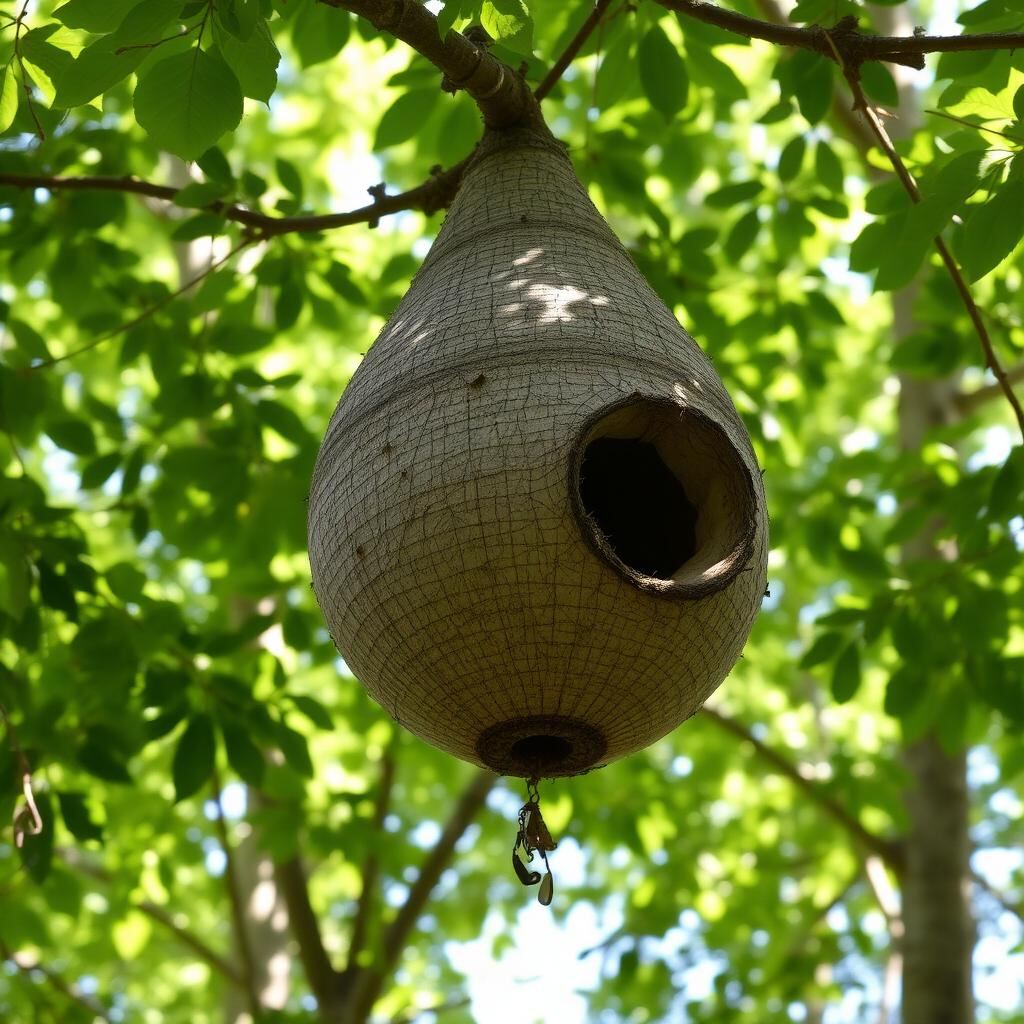
European hornet nests are made from the same chewed wood pulp as wasp nests and look broadly similar. The key difference is that European hornets almost always build the entrance at the bottom of the nest, facing downward, whereas wasps typically have a hole at the side.
Are European hornets dangerous?
A European hornet sting is painful — more so than a common wasp sting — partly because they deliver more venom and partly because they can sting repeatedly. However, the risk of anaphylaxis is similar to wasp stings. European hornets will defend their nest vigorously if disturbed. Do not attempt to treat it yourself — call us on 01727 789571.
The Asian hornet — Vespa velutina (yellow-legged hornet)
Why this matters right now
The Asian hornet (officially the yellow-legged hornet) is an invasive species spreading rapidly across England from the south coast. Confirmed sightings have been recorded in counties bordering Hertfordshire. 2025 has already seen the fastest rate of spread ever recorded in the UK, with 163 nests confirmed by June.
This species poses a serious ecological threat, particularly to honeybees — a single Asian hornet can kill up to 50 honeybees per day.
How to identify an Asian hornet
The single most important feature: yellow legs. Asian hornets have distinctively yellow-tipped legs (yellow from the knee down). No other hornet or wasp in the UK shares this feature.
- Body predominantly dark brown or black with a single orange-yellow band
- Yellow-tipped legs — the most reliable identification feature
- Slightly smaller than the European hornet
- Black head with an orange-yellow face
- NOT active at night — unlike the European hornet
- Nests built very high in trees (10m or more) — not in buildings or underground
What to do if you see an Asian hornet
Do not approach, disturb, or attempt to treat a suspected Asian hornet nest. Report immediately via the Asian Hornet Watch app (free on iOS and Android) or online at nnss.gov.uk. Then call us on 01727 789571 — we will help you assess the sighting and liaise with the National Bee Unit.
Hornet nest removal Hertfordshire — our service
For European hornet nests, our service is identical to our wasp nest treatment. We identify the nest entry point, apply a professional-grade insecticide treatment, and the colony is inactive within a few hours.
- Prices from £99 — guaranteed price at time of booking, no premium for hornet jobs
- Same-day service across all Hertfordshire postcodes
- Free revisit guarantee — unconditional
- Species identification included — we will never treat a nest without first confirming the species
See our related guides: sting treatment, species identification, signs of a nest.