
Species Comparison
Common Wasp vs German Wasp
If you have a wasp nest in the UK, the species is almost certainly one of these two. They look near-identical at a glance but can be told apart in a few seconds once you know what to look for. Here's how — and why it matters.
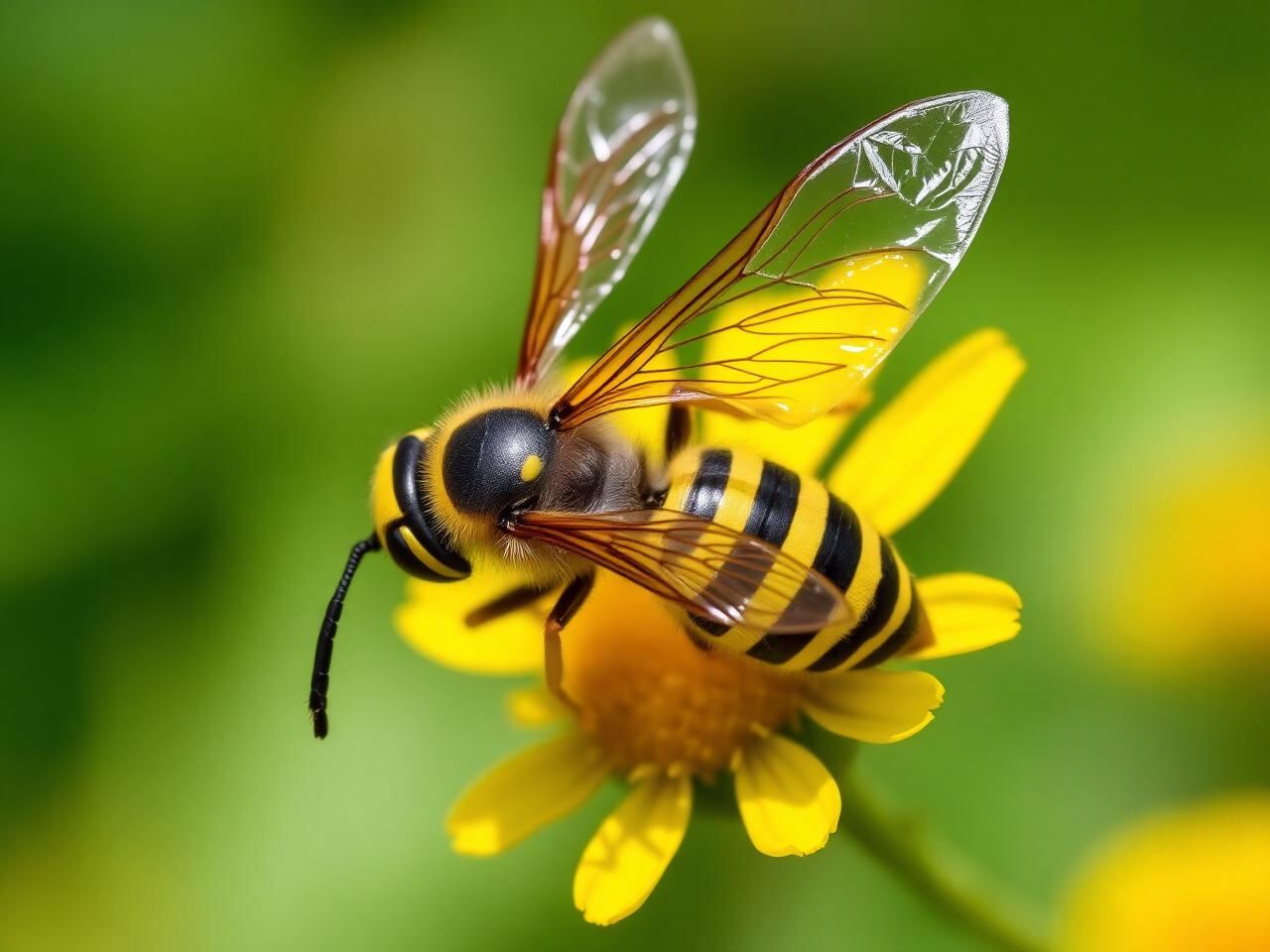
More than 95% of the nest jobs we attend across Hertfordshire are either the common wasp (Vespula vulgaris) or the German wasp (Vespula germanica). The remaining 5% is mostly tree wasps, Saxon wasps and the occasional Norwegian wasp — all distinguishable on sight by an experienced eye, but rarely responsible for the standard "nest in my loft" call.
Telling common from German matters mainly for prevention and interest. Both are treated the same way and both colonies die out on the same timeline.
The single fastest ID — face markings
Catch a still wasp on a window pane and look at its face from the front. The pattern between the eyes is diagnostic.
- Common wasp (Vespula vulgaris): a single black anchor-shape or downward-pointing dagger between the antennae.
- German wasp (Vespula germanica): three distinct small black dots arranged in a triangle on the face.
Neither pattern is universal — there's natural variation — but this is the feature professional entomologists use first, and it works for a confident ID in about 80% of specimens.
Side by side
| Feature | Common wasp | German wasp |
|---|---|---|
| Latin name | Vespula vulgaris | Vespula germanica |
| Worker size | 12-17mm | 12-17mm (often slightly larger) |
| Face mark between eyes | Single anchor / dagger | Three dots in a triangle |
| Body colour | Bright yellow and black | Bright yellow and black (often paler yellow) |
| Abdomen markings | Black dots and bars often merge | Black markings more separated, cleaner |
| Nest paper colour | Yellow-brown, marbled bands | Pale grey, more uniform |
| Nest paper material | Soft, weathered fence panels, rotten wood | Harder, drier timber — old shed cladding, fascias |
| Typical nest site | Lofts, sheds, ground voids, banks | Cavity walls, chimneys, lofts |
| Colony size at peak | 3,000-5,000 | 4,000-6,000 |
| Aggression at nest | Standard wasp defensive response | Marginally more persistent |
| Aggression at food | Bold at picnics in late summer | Bolder still — the classic 'jam-jar' wasp |
Behaviour — when species really shows
Through July and most of August both species behave similarly: workers spend their days hunting caterpillars and flies to feed the larvae, and largely ignore humans. The difference shows up from mid-August onwards, when the colony's protein demand drops and adult workers switch to sugar feeding. German wasps are noticeably more persistent at jam-pots, fizzy drinks and fallen fruit. The wasp that won't leave your beer alone is statistically more likely to be a German.
Nest paper — the giveaway after treatment
Once a nest is treated and accessible, the paper itself is the easiest species ID. Common wasp nests show distinct marbled bands of brown and pale yellow, reflecting the different woods the queen and workers chewed over the season. German wasp nests are flatter in colour — a uniform pale grey paper that looks almost like recycled card. The cell sizes are very similar between the two species.
Where each species prefers to nest
Common wasps are the species behind most ground nests — old vole burrows, banks, decking voids — and most loft nests in traditionally-built houses. German wasps are over-represented in cavity wall and chimney jobs, particularly in 1970s-90s housing stock where cavity insulation has gaps the queen can exploit.
That's a tendency, not a rule. We see common wasps in chimneys and German wasps in lawns regularly. Don't rely on location alone to ID the species.
Stings — is one worse than the other?
The venom chemistry is similar enough that an allergic person should treat both species as equivalent risks. A confirmed allergy to common wasp venom typically cross-reacts with German wasp venom and vice versa. The pain, swelling and reaction timeline are indistinguishable between the two for non-allergic adults. See our sting and allergy guide for first aid.
Other UK wasps you might encounter
- Tree wasp (Dolichovespula sylvestris): builds exposed papery grey nests hanging from branches, garden sheds and bird boxes. Smaller colonies, more docile.
- Saxon wasp (Dolichovespula saxonica): a more recent UK arrival. Similar to the tree wasp, often nesting low in hedges and shrubs.
- Norwegian wasp (Dolichovespula norwegica): uncommon, more often seen in Scotland and northern England.
- European hornet (Vespa crabro): much larger, brown-and-orange — covered in our dedicated guide.
Related guides
- UK wasp & bee species ID
- Wasps vs hornets
- European hornet (Vespa crabro)
- Asian hornet (Vespa velutina)
- Signs of a wasp nest