
DIY vs Professional
Can I Remove a Wasp Nest Myself? Honest Advice.
The truthful answer is: it depends. There are circumstances where a cautious DIY approach is reasonable. There are others where attempting it yourself is genuinely dangerous, and some where it will actively make the problem worse. We will cover all of it.
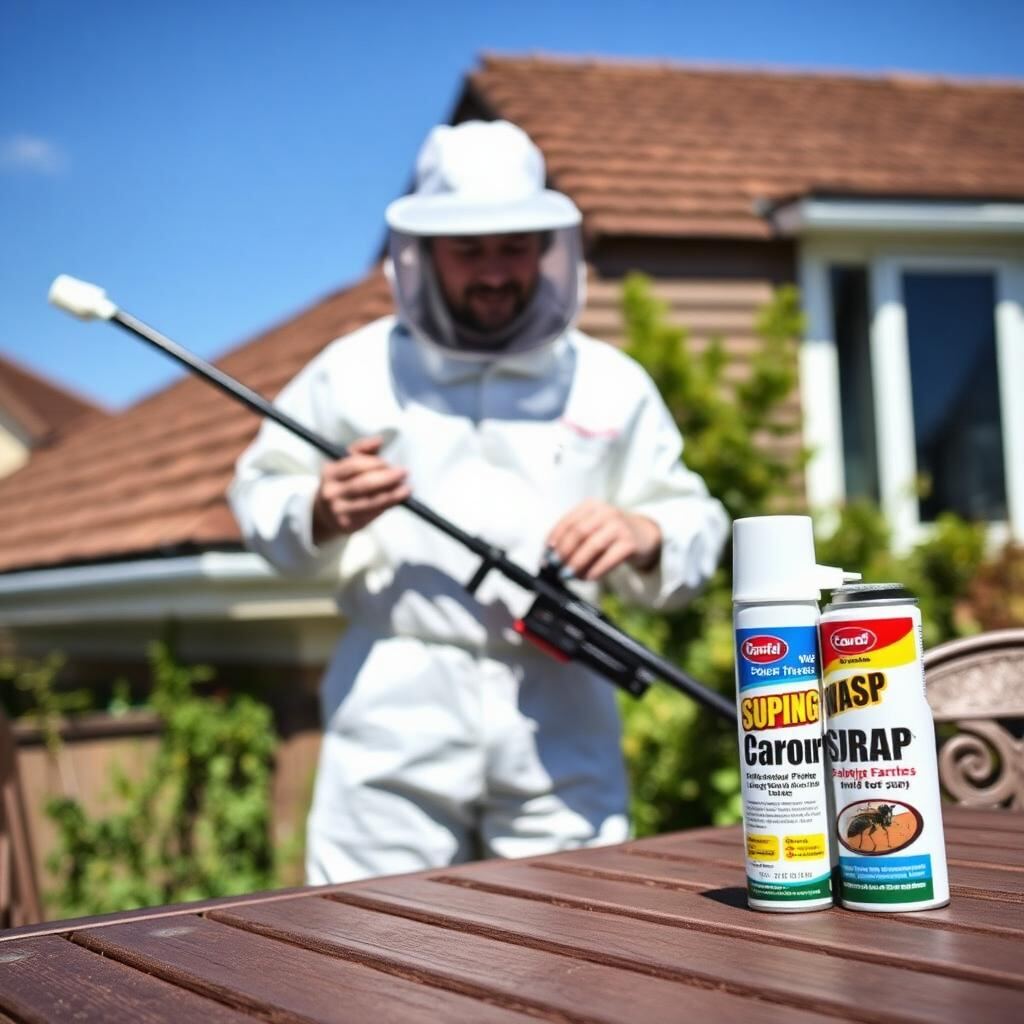
This is one of the most common questions we get, and we are going to give you an honest answer rather than simply telling you to call a professional. What matters most is that you make an informed decision with accurate information — not that you necessarily call us.
The honest assessment: when DIY might be acceptable
All of the following conditions need to be true for DIY treatment to be a reasonable option:
Why DIY often fails
The product problem
The most important thing to understand is the difference between professional-grade insecticides and the products available in garden centres and DIY stores.
Professional insecticide powders (which require a PA1/PA6 licence) are dramatically more effective than consumer products. They are designed to be applied to the nest entrance and carried inside by returning wasps — distributing the treatment throughout the entire colony, including the queen. When applied correctly, they render a nest inactive within 2–3 hours.
Consumer wasp sprays contain significantly lower concentrations of active ingredients. They are designed to kill wasps you can directly spray. They are not designed — and are not effective — for penetrating a large, established nest and killing the queen.
The protective equipment problem
A full wasp suit creates a physical barrier wasp stingers cannot penetrate, and a sealed environment that prevents wasps getting inside. Consumer versions sold online vary enormously in quality — particularly around the face, neck, wrists, and ankles where wasps will inevitably probe. A professional technician in a properly rated suit and applying commercial-grade powder typically receives zero stings. The same job in a consumer-grade suit is a very different risk profile.
The access and positioning problem
Most Hertfordshire wasp nests are in loft voids, roof cavities, or under eaves — locations that require a ladder or roof access. Treating a nest entrance at height while wearing protective clothing, handling an applicator, and managing a defensive colony response requires training and experience. Falls from ladders are a genuine risk even without wasps.
The burning / water / blocking approaches
| Approach | Why it does not work |
|---|---|
| Burning the nest | Extremely dangerous. Wasp nests are essentially dry paper — highly flammable. Fires started by people attempting to burn wasp nests in lofts, sheds, and under eaves cause property damage every year. Most of the colony are foragers outside the nest when you burn it — they return to find their home destroyed and on fire. |
| Flooding with water | Not effective. Nest material sheds water; pouring water into a nest entrance sends a small amount in and agitates the colony. Ground nests can hold back significant water before flooding occurs. |
| Blocking the entrance | Never do this while a nest is active. Wasps chew through alternative surfaces to find an exit — plasterboard, ceiling panels, internal woodwork. We have attended properties where blocked nest entrances have resulted in thousands of wasps emerging inside the living space. |
| Destroying the nest physically | Provokes an immediate, colony-wide defensive response. A disturbed nest of several thousand workers can deliver 30–40 stings per second to a nearby human. Mass envenomation (30+ stings) can cause toxic systemic reactions in otherwise healthy adults. |
The cost comparison
| Approach | Typical cost | Realistic outcome |
|---|---|---|
| Shop spray + basic suit | £30 – £80 | Effective on very small early-season nests. Often fails on established nests, potentially making them harder to treat. |
| Professional spray products (licence required) | Not available to public | Not applicable |
| Our professional treatment | Prices from £99, guaranteed price at booking | 97% resolved in a single visit. Free return visit if not. PA1/PA6 licensed products. Guaranteed. |
| A&E visit after mass stinging | Unpredictable | Not a cost to factor in lightly if you have any sting sensitivity. |
If you do decide to treat yourself
If the conditions in the first section are met and you decide to proceed, here is how to maximise success and minimise risk:
- Treat at dusk or just after dark. The foragers have returned and the colony is at maximum occupancy but minimum activity. Treating in daylight means a large proportion of the colony is outside and will return to find the nest disturbed.
- Wear full protective clothing. A full bee/wasp suit with a properly sealed veil, thick gloves taped to the sleeves, and boots taped to the legs. Wasps will find any gap.
- Use an insecticide powder, not a spray. Powder applied to the entrance is carried into the nest by returning wasps. Look for products containing permethrin or deltamethrin. Read labels carefully.
- Apply to the entrance and leave immediately. Do not linger. Return in 24 hours to check activity. Do not block the entrance.
- Have a retreat path planned. Know exactly how you are going to move away quickly and safely. Do not put a ladder or obstacle between you and your escape route.
- Have an antihistamine available. Take an oral antihistamine before starting. If you develop any systemic symptoms (hives spreading beyond the sting, breathing difficulty, throat swelling), call 999 immediately.
Related guides
- The wasp life cycle
- What happens if you leave a wasp nest?
- When do wasps die off?
- Wasp nest in a loft
- Wasp sting treatment