
Wasp Biology
The Wasp Life Cycle — Complete UK Seasonal Guide
Understanding the wasp life cycle is the most useful thing you can know when deciding how and when to deal with a wasp problem. Timing of treatment, autumn aggression, why winter treatment is almost never needed, and why June beats August — all of it comes from understanding the cycle.
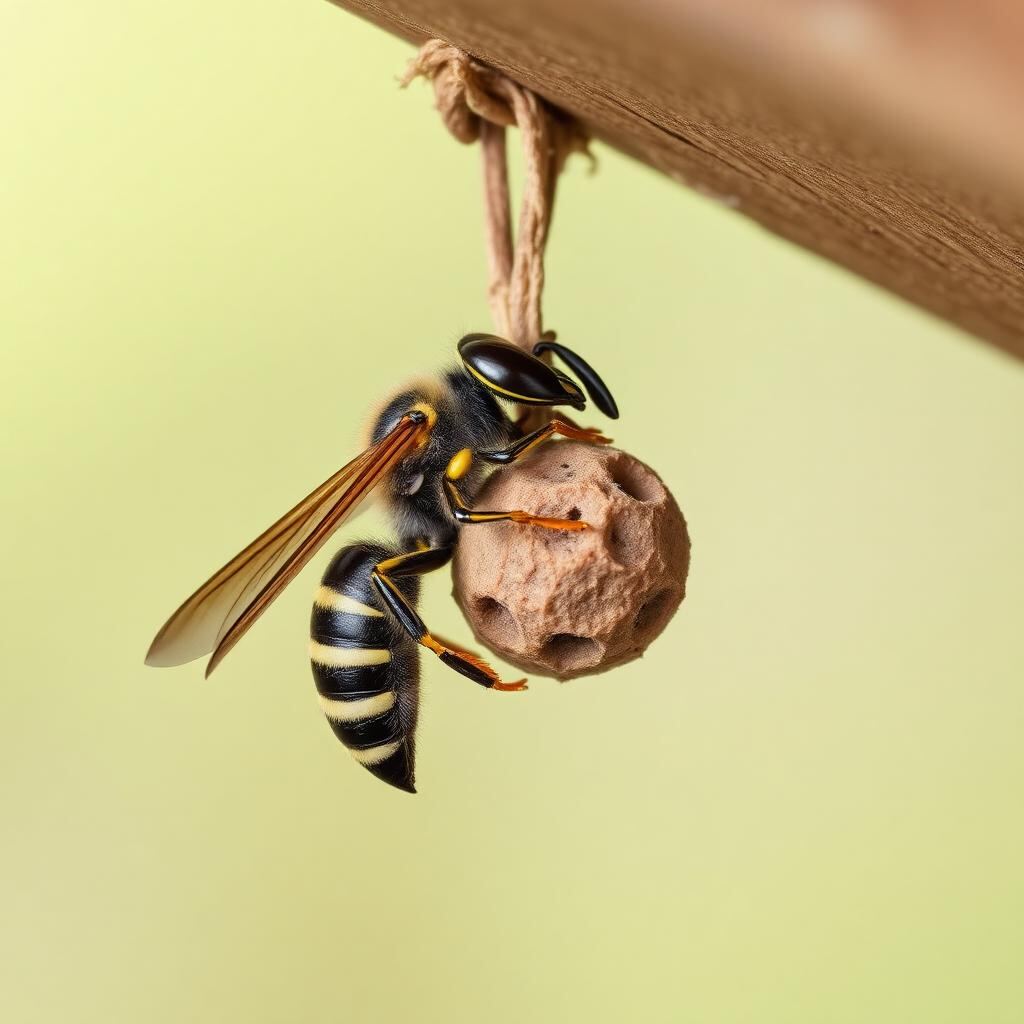
This guide covers the complete annual cycle of the Common Wasp (Vespula vulgaris) and German Wasp (Vespula germanica) — the two species responsible for the vast majority of wasp problems in Hertfordshire and across the UK.
The six stages of the wasp life cycle
Stage 1: Hibernation (November – March)
The colony that caused you problems last summer is gone. The workers, the drones, and the original queen all died as temperatures dropped and food disappeared in autumn. The only survivors are the newly mated queens — the daughters of last season's colony who mated in September and October and then found sheltered spots to hibernate.
These overwintering queens enter a state called diapause — a form of hibernation in which their metabolism slows dramatically. Common hibernation sites include behind loose bark, in wall cavities, in loft insulation, in hollow plant stems, in sheds and outbuildings, and underground in old mouse or rabbit burrows.
Survival rates are brutal. A large colony produces between 1,000 and 1,500 new queens each autumn. Only around five in every thousand survive to found a new colony the following spring.
Stage 2: Queen emergence and nest foundation (March – May)
The trigger for emergence is temperature. When consistent daytime temperatures exceed around 10°C — typically March in southern England, April further north — hibernating queens begin to stir. They emerge gradually, feeding on early nectar to restore their energy.
The queen's first task is finding a suitable nest site. She may fly several miles in search of the right location: dark, dry, sheltered, with a small entrance she can defend alone. She evaluates dozens of potential sites — loft voids, wall cavities, soil banks, tree hollows, garden sheds — before committing.
Once she has chosen, she begins construction using only her mandibles and saliva. She chews dead wood — fence posts, tree bark, garden furniture — mixing fibres with saliva to create a grey papery pulp. By the time she has laid her first 10 to 20 eggs, the nest is no larger than a golf ball.
Stage 3: First workers and colony establishment (May – June)
The eggs hatch into larvae within a few days. After around two weeks as larvae they pupate, and 28 to 48 days after the egg was laid the first adult workers emerge. From this moment, the queen never leaves the nest again. The workers take over every task except egg-laying:
- Nest expansion — chewing more wood pulp and building new cells
- Foraging for wood fibre to make nest material
- Hunting insects (caterpillars, flies, beetle larvae, aphids) to feed the larvae
- Collecting water to regulate nest temperature
- Feeding the larvae, which in return produce a sugary secretion that feeds the workers
- Defending the nest
The queen, now free from foraging, lays 200 to 300 eggs per day. The nest typically doubles in size every week or two through June.
Stage 4: Peak colony (July – August)
By mid-July a well-established colony is a formidable structure.
| Feature | Detail at peak |
|---|---|
| Nest structure | Up to 10,000 cells in horizontal combs surrounded by the papery envelope |
| Colony size | 5,000–8,000 workers (Common Wasp); 10,000+ for German Wasp |
| Queen output | 200–300 new eggs per day |
| Nest size | Roughly a football in a typical Hertfordshire loft; can reach beach-ball size if undisturbed |
| Worker lifespan | Around 12–22 days. The colony constantly produces new workers to replace those that die. |
| Daily protein intake | A peak colony consumes an estimated 1 kg of insects per week |
This is peak season for wasp pest control call-outs. Entry and exit traffic at the nest is unmistakable — often dozens of wasps per minute. Workers at this stage are purposeful and relatively calm; their job is foraging and nest maintenance, not aggression. They will defend the nest if threatened, but will not seek confrontation away from it.
Stage 5: Colony decline and new queen production (Late August – October)
In late summer the queen begins producing a different type of egg. Instead of sterile worker females, she now lays eggs that will develop into fertile males (drones) and new queens. The new queens and males leave the nest to mate. Males die shortly afterwards. The newly mated queens feed intensively on nectar to build fat reserves, then find sheltered spots to begin hibernation.
Meanwhile the original queen's pheromone production wanes. Without her chemical control the social structure that has held the colony together all summer begins to break down:
- Workers no longer have a larvae-derived sugar supply and must seek sugars independently
- This drives the intense late-summer interest in human food and drink
- Without purposeful colony work, workers become erratic and unpredictable
- Defensive aggression increases — wasps will sting with far less provocation
- Workers are also ageing — most are nearing the end of their 12–22 day lifespan
This is the period — late August through September — when the vast majority of unprovoked wasp stings happen. These are tired, hungry insects without purpose, searching for sugar they can no longer get from larvae.
Stage 6: Colony death (October – November)
As temperatures drop consistently below 10°C at night, the remaining workers and the original queen die. The nest is abandoned. The physical nest is left behind and will not be reused. It decays naturally over winter, posing no risk.
Month-by-month reference guide
| Month | What is happening | What you should do |
|---|---|---|
| Jan – Feb | Queens in hibernation. No active nests. | Ideal time for roofline maintenance. Seal any gaps found. |
| March | First queens may emerge in warm spells. Begin feeding and prospecting. | Inspect lofts and sheds. Seal gaps before queens establish. |
| April | Queens actively searching and founding nests. Primary nests pea to golf-ball sized. | Most sightings are bees, not wasps. Call to identify. Treat small starter nests immediately if found. |
| May | First workers emerge. Colony establishes and begins growing. | Best time to treat. Small colony, fast treatment. Call us immediately if you find activity. |
| June | Rapid nest growth. Workers foraging constantly. Tennis ball to grapefruit size. | Treat now. Still manageable. Every week the nest grows significantly. |
| July | Peak colony growth. Football-size nests. Activity heavy and obvious. | Most common call-out month. Treatment fully effective. Do not delay. |
| August | Peak season. Maximum colony size. Workers fully focused on foraging. | Treat immediately. Nests at full size but treatment is still fully effective. |
| September | Colony begins to decline. New queens and males produced. Workers become aggressive and erratic. | Still worth treating if active and near people. Most dangerous month for stings. |
| October | Colony dying off. Last workers dying. Queens have dispersed to hibernate. | If still active in early October, treat. Mid-late October — wait and observe. |
| Nov – Dec | Colony dead. Nest abandoned. No active wasps. | No treatment needed. Seal entry point if you wish to reduce risk next year. |
Key facts about the wasp life cycle
- A single colony produces 1,000–1,500 new queens each autumn. Only ~5 per 1,000 survive to found a new colony the following spring.
- The queen lays 200–300 eggs per day at her peak laying rate.
- It takes 28–48 days from egg to adult worker, depending on temperature.
- Worker wasps live for only 12–22 days. The colony constantly replenishes itself.
- A queen emerging from hibernation can fly up to 40 miles searching for the right nest site.
- Once she has five to seven workers, the queen stays inside the nest for the rest of her life.
- The grubs (larvae) produce a sugary secretion that feeds the adult workers — this is why workers stop scavenging for sugar until the colony breaks down in late summer.
- Wasp nests are never reused. Each queen builds fresh in spring. Old nests decay naturally over winter.
Related guides
- When do wasps die off?
- What happens if you leave a wasp nest?
- Can I remove a wasp nest myself?
- Wasp nest in a loft
- Signs of a nest