
Shed & Outbuilding Nests
Wasp Nest in a Shed, Garage or Outbuilding
Opening the shed door for the first time in summer and being met by a wall of wasps is a classic moment. Close the door, step back, and call us on 01727 789571. We treat outbuilding nests from outside in a single visit.
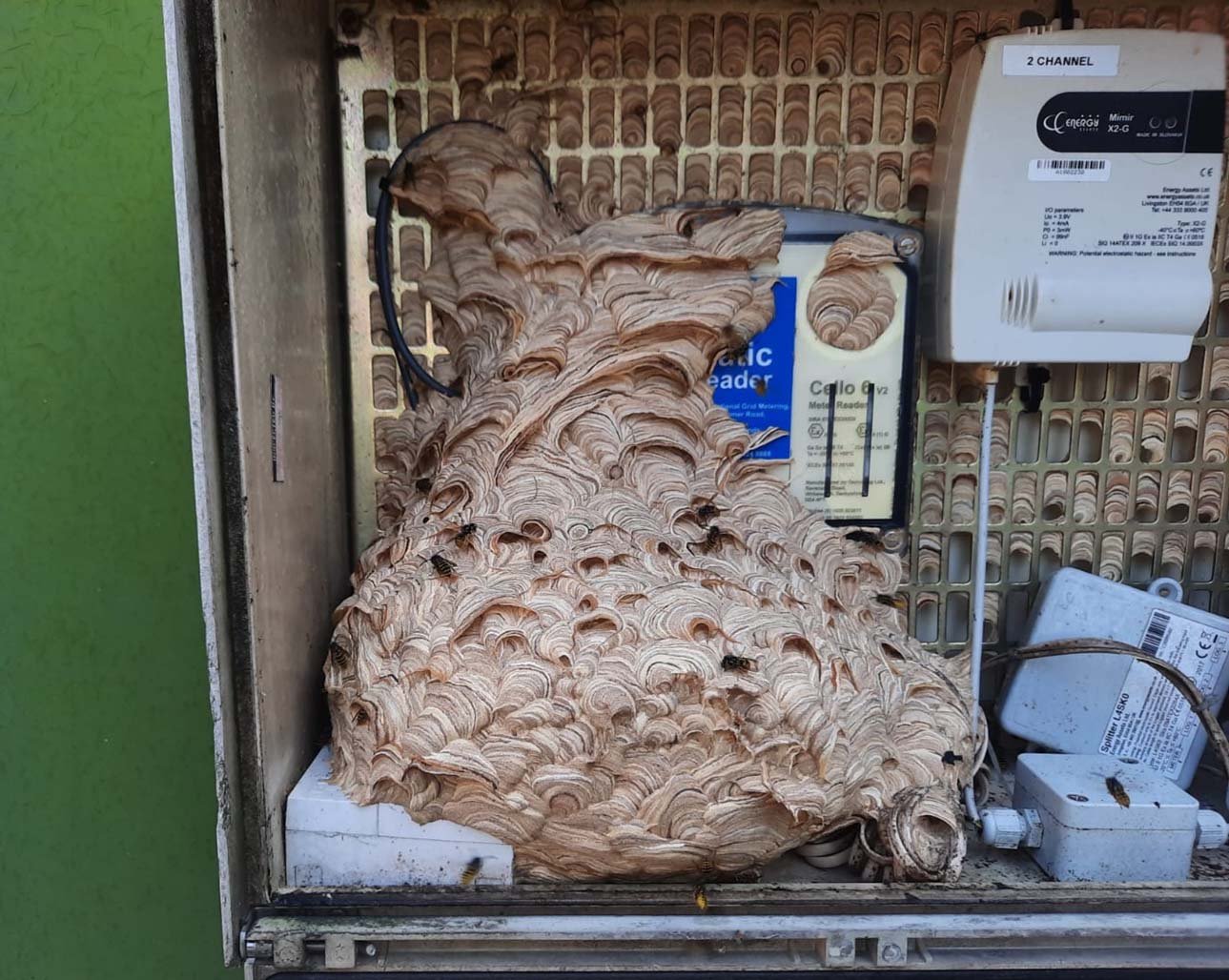
Sheds, garages, summerhouses, log stores and detached outbuildings are textbook wasp nest sites. Most are unused for long stretches in spring — exactly when queen wasps are prospecting — and most have at least one small gap that gives access to a sheltered roof void or wall cavity. By June, what started as a golf-ball-sized cluster has grown into a colony of several thousand workers behind the cladding.
The most common shed nest sites
| Location in the outbuilding | What to look for |
|---|---|
| Roof void above the ceiling lining | Wasps entering via a gap at the gable end, under the felt edge or through a vent. The most common shed nest position. |
| Inside the apex / against rafters | Visible nest hanging from the apex, often grey and football-shaped. Common in sheds without a ceiling lining. |
| Wall cavity between cladding and lining | Entry point in a knot hole, gap in tongue-and-groove, or where boards have shrunk over time. |
| Under the floor (raised sheds) | Less common, but seen where the shed sits on bearers with a void underneath. Wasps enter at ground level under the door. |
| Inside attached log stores | Stacked logs create thousands of nesting cavities. Queens routinely build here. |
| Inside detached garages — eaves | Often in the corner above the roller-door track, accessed via a gap at the eaves outside. |
How to confirm before opening the shed again
What NOT to do
| Do NOT | Why |
|---|---|
| Spray the visible nest with bug killer | Spraying an exposed nest at close range provokes immediate mass defence. Hundreds of wasps will leave the nest and attack the spray source. Multiple stings are likely. |
| Knock the nest down with a brush | The classic shed accident. The nest breaks apart, thousands of wasps are released into a confined space, and you cannot get out fast enough. |
| Burn the nest | Wasp nests are made of dry paper and ignite. Sheds are made of dry timber. This is how shed fires happen. |
| Block the entry hole during the day | Traps foraging wasps outside, who then become aggressive at the entry point. Returning wasps will look for any alternative way in — often through the building. |
| Try to use the shed without treating | A bumped wall, a vibrating power tool or simply your presence registered through the cladding is enough to trigger a defensive response from the colony nearby. |
How we treat a shed or outbuilding nest
- We locate the external entry point by observing the wasp flight path from a safe distance.
- Powder is applied at the entry point from outside. We do not need to open the shed door.
- Colony inactive within 2-4 hours. Activity at the entry point will be visibly reduced within the first hour and effectively stopped by the next morning.
- Re-enter safely after 24-48 hours. By then it is safe to reopen the shed and resume normal use.
- Free revisit if needed. Most outbuilding nests are resolved in a single visit.
Preventing next year's nest
After the colony is dead, remove the nest itself, seal the entry point the wasps used (silicone, expanding foam or felt patch depending on the material), and consider hanging a wasp decoy nest from late April. See the prevention guide for full details.
Related guides
- Wasp nest in the garden (ground / decking)
- Signs of a wasp nest
- Prevention guide
- Wasp nest removal cost (UK)
- Hertfordshire coverage areas