
Wall Cavity Nests
Wasp Nest in a Wall Cavity or Air Brick
Cavity nests are harder to locate than loft nests but straightforward to treat once the entry point is identified. Whatever you do, do not block the entrance to a live nest — it makes the problem dramatically worse.
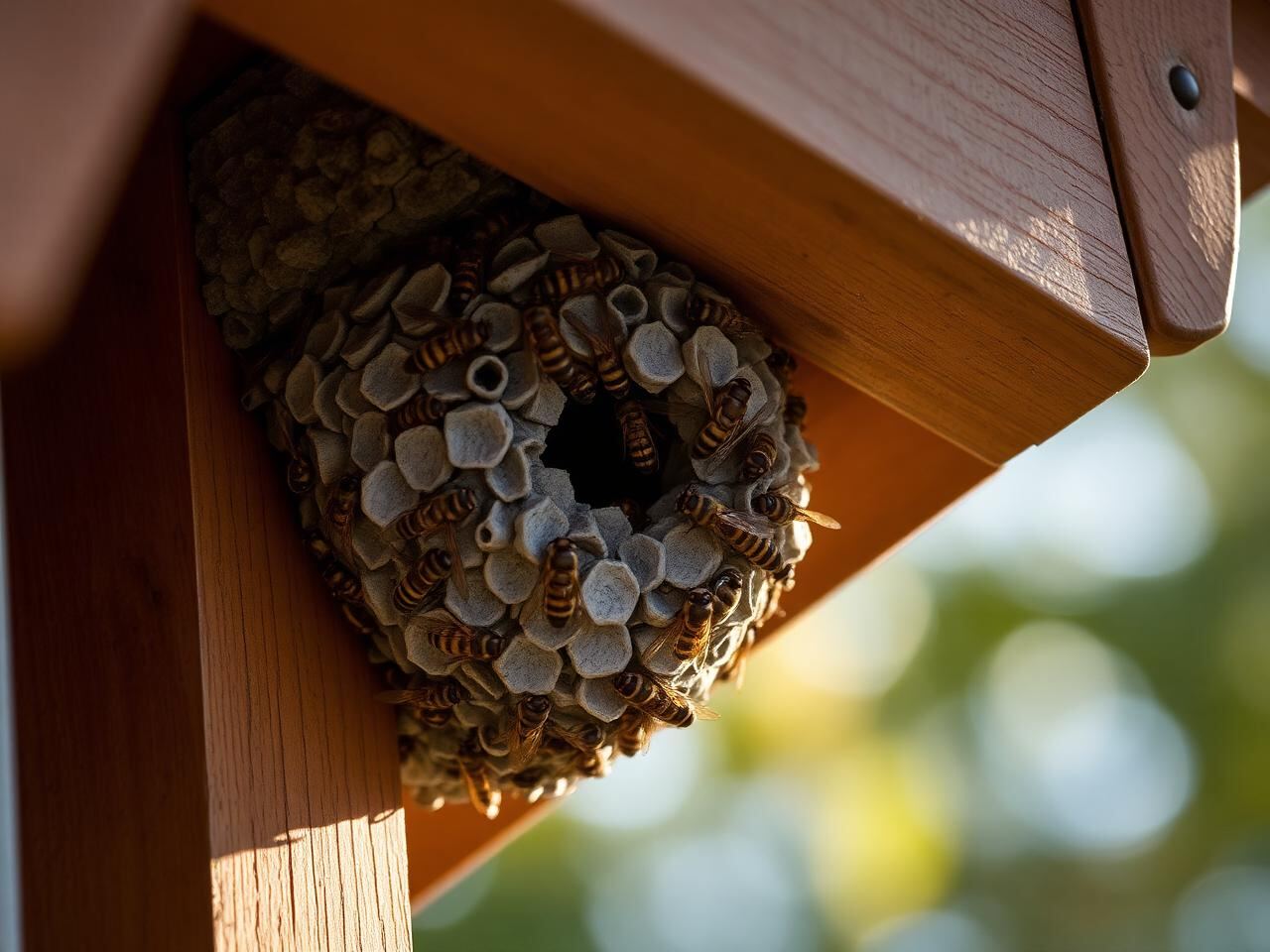
Wall cavity nests are the second most common nest type we treat, after loft nests. The space between the inner and outer skin of a cavity wall is sheltered, ventilated, dry and inaccessible to predators — perfect wasp habitat. The most common entry points are air bricks, weep vents, gaps around pipes or cables, and failed mortar joints.
How to identify a wall cavity nest
| Entry point | Typical property |
|---|---|
| Air brick at low level | Most common. Victorian, Edwardian, 1930s and post-war brick properties throughout Hertfordshire. |
| Weep vent (small plastic slot) | Modern cavity wall construction. The weep vents are sized for water drainage but are also wasp-accessible. |
| Failed mortar joint | Older brick properties where lime mortar has eroded. Often at the corners of windows or where the wall meets the soffit. |
| Around a service penetration | Where a pipe, cable, vent or boiler flue passes through the wall and the seal has failed. |
| Behind decorative cladding | Mock-Tudor timbers, render with bell-cast detail, or hung tiles on the upper storey often have gaps behind them. |
Look for a single low-level entry point. Unlike loft nests, wall cavity nests often have an entry point at head height or below — air bricks are typically a foot off the ground. A steady stream of wasps to and from an air brick is the definitive sign.
Wasps appearing around electrical sockets or light switches on a particular wall. Urgent. The nest is inside the cavity directly behind. Treat today.
What NOT to do
| Do NOT | Why |
|---|---|
| Block the air brick or weep vent | Trapping the colony forces wasps to find an alternative exit, which can mean chewing through plasterboard or coming into rooms through socket back-boxes. |
| Spray foam into the entry point | The foam stops at the entry — it does not reach the nest. The colony is now agitated and looking for another way out. |
| Push wire or rod into the hole to disturb the nest | Triggers an immediate mass defence response. Wasps will pour out of the entry point. |
| Spray bug killer at the air brick | Kills the wasps at the entrance but not in the nest. Returning foragers find the entrance contaminated and become aggressive. |
| Try to use insulation injection to suffocate the nest | Cavity insulation contractors will not work on a wall with a live nest. The colony must be treated first; insulation work can follow once the wasps are dead. |
How we treat a cavity wall nest
- We confirm the entry point from the wasp flight pattern outside.
- Insecticide powder is applied directly into the entry point using a long-reach applicator. The powder is carried into the cavity by returning foragers and distributes through the nest within a few hours.
- Colony inactive within 2-4 hours for most cavity nests. Wall cavities sometimes take slightly longer than lofts because the void is more compartmented.
- The entry point stays open for at least 7 days after treatment to allow returning foragers to access the (now lethal) entrance.
- Seal the entry point after the colony is fully dead — typically 7-10 days. We can advise on the right material for your wall type.
- Free revisit guarantee. 97% of cavity nests resolved in a single visit.
Related guides
- Wasp nest in a loft
- Wasp nest in soffits or fascia
- Signs of a wasp nest
- Wasp nest removal cost
- Hertfordshire coverage areas
Frequently asked questions — cavity wall nests
Can wasps get from a wall cavity into the house?+
Yes, in some properties. Cavity wall insulation creates an internal barrier in newer builds, but in older properties and around services (pipes, cables, electrical sockets, light switches) wasps can find their way into rooms. This is one of the urgent reasons to treat a cavity nest promptly.
Will treating a cavity nest damage the cavity insulation?+
No. Insecticide powder is applied through the existing entry point in tiny quantities. It does not contaminate, damage or reduce the performance of cavity wall insulation.
What if I have already filled the air brick with foam to block them?+
Tell us at the time of booking. Blocking the entrance traps the colony and they will be looking for alternative exits — often into the property. We can usually still treat by reopening the original entry point, but the situation is more urgent.
Will the dead nest cause a smell?+
Occasionally, for a few days, a faint odour from inside the wall. It dissipates as the nest dries. Most homeowners do not notice anything.
Do I need the cavity opened up to remove the nest?+
No. The physical nest material stays in the cavity once the colony is dead. It does not need to be removed and will dry out naturally. It will not be reused next year.
Wasps in a wall cavity or air brick? Call 01727 789571 or 0800 046 3473. Same-day service. Fixed price from £99. Free revisit guarantee.